How-To Guides
How to Clean RV Solar Panels: The Complete Roof Guide (2026)
Manufacturer-backed cleaning guide · What to use, what to avoid, snow and boondocking methods · October 2026
Dirty solar panels produce less power, and RV panels get dirty fast: highway grime, campground dust, pollen, bird droppings, and tree sap all land on a flat roof that never gets rained on at an angle. The good news is that cleaning them is simple, and the manufacturers themselves tell you exactly how to do it safely. This guide follows official guidance from Renogy, Go Power!, Zamp Solar, and others, plus the roof-access and low-water techniques that generic house-panel guides never cover. For wiring and mounting questions, see our RV solar wiring diagram guide and mounting guide.
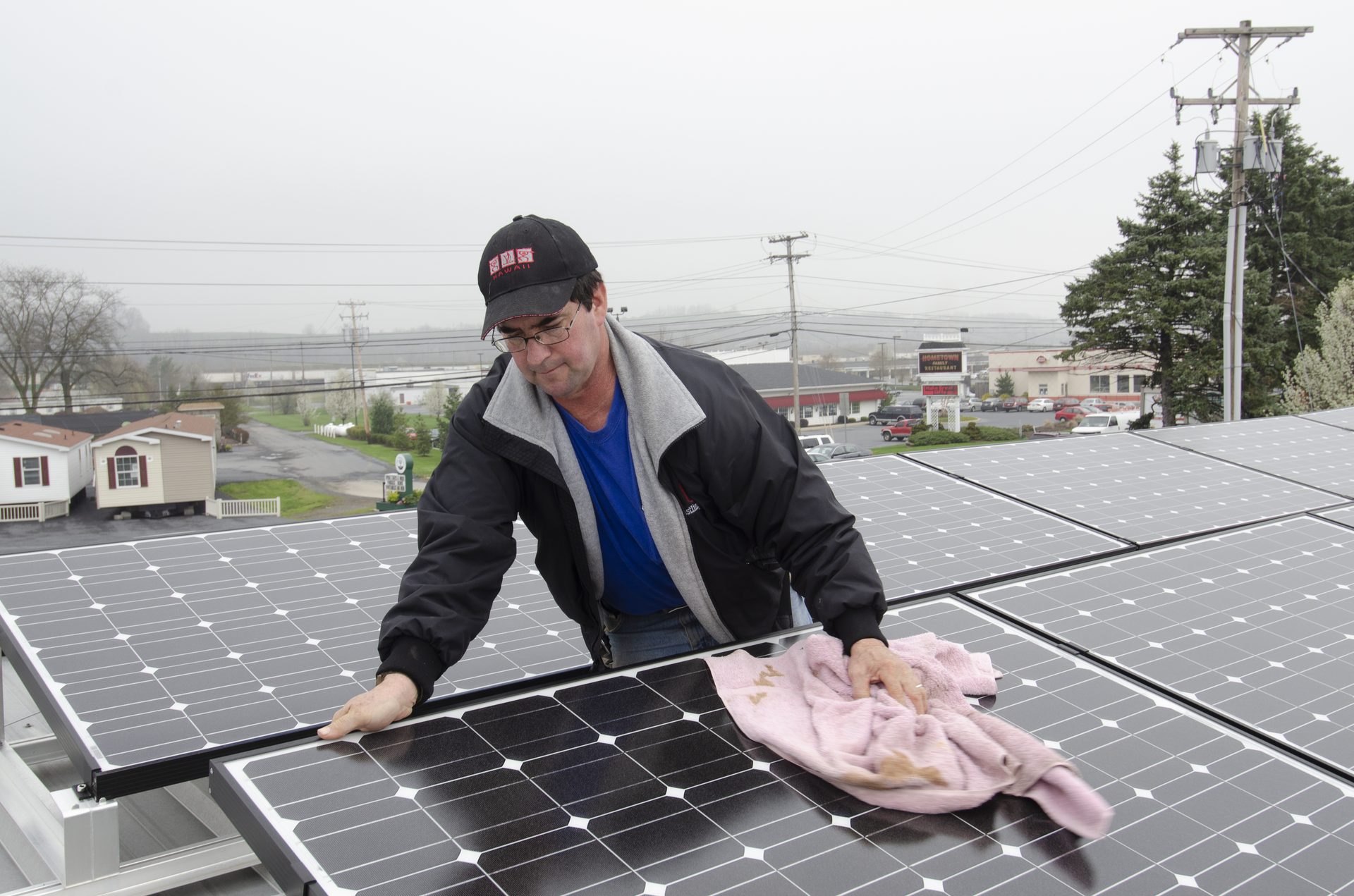
Affiliate disclosure: RV Solar Power Guide is reader-supported. When you buy through links on this page, we may earn a commission at no extra cost to you. Our picks come from comparing verified specs and price. We don't accept payment for placement.
The short version
Rinse with a hose on gentle pressure, wash with a soft brush and plain water, use mild soap only for stubborn spots, rinse and dry. Clean when panels are cool: early morning or dusk.
Never use
Pressure washers, abrasive pads, ammonia, bleach, or acid/alkali cleaners. Manufacturers explicitly warn against all of these.
How often
Monthly is the manufacturer baseline (Go Power!). Every 2 to 4 weeks on dusty roads or near the coast; less often in clean areas.
Snow rule
Soft brush only. No shovels, no scrapers, no hot water on a frozen panel.
How to clean RV solar panels
Do your panels actually need cleaning?
Before you climb up there, check whether a wash will actually help. Two quick tests beat a fixed schedule.
The visual check. Look at the glass in low-angle light, early morning or late afternoon. A uniform haze of dust, visible pollen film, bird droppings, or sap spots means cleaning will help. If the glass looks clear and water still beads on it, leave it alone.
The output check. Compare your charge controller or monitoring app output against what the same array produced in similar sun last month. A gradual decline over weeks, with no shading or weather change to explain it, points to soiling. A sudden sharp drop usually means shade, a tripped breaker, or a wiring issue instead, so check those first.
One more thing worth knowing: light rain rinses loose dust but does not clean panels. It dries into mineral spots and leaves droppings, sap, and road film untouched. If the panels look filmed after rain, they still need a wash.
What manufacturers recommend
This guide follows official manufacturer guidance, not forum lore. Here is what the major RV solar brands actually publish:
Renogy (installation manual, section 8.1): wipe the glass with a wet sponge or soft cloth, and never use a cleaning agent containing acid or alkali. Clean in the early morning or at dusk to avoid electrical shock or burn, and never clean a panel with damaged glass, backsheet, or wiring. For snow, remove it gently and never use sharp tools on the glass.
Go Power! (RV kits manual and maintenance guide): clean monthly, more often in dry months, using water and a soft sponge or cloth, with a mild non-abrasive cleanser only for stubborn residue, then rinse well. Quote: a pressure washer is not recommended. Use a soft brush for snow. Clean bird droppings off as soon as possible. Turning the system off is only required if you disconnect wiring. Go Power! also says to check all roof penetrations and replace sealant areas as required, which makes every cleaning session a good inspection opportunity.
Zamp Solar, Newpowa, and HQST all give the same core advice in their product manuals: a soft damp cloth with water, no abrasive materials, no harsh chemicals. Newpowa lists a damp-towel wipe as part of the annual inspection.
The consensus is clear and worth memorizing: water plus soft materials, mild soap only when needed, no pressure washers, no abrasives, no harsh chemicals, and cool panels only. Everything in this guide builds on that foundation.
What you will need
You probably own most of this already. The one RV-specific item worth buying is the telescoping brush: it lets you reach the middle of the roof array from a ladder without walking the roof.
- Garden hose with an adjustable nozzle set to a gentle fan or shower pattern. You want flow, not pressure.
- Telescoping soft-bristle brush (the kind sold for RV and car washing). Soft bristles only; nothing labeled heavy-duty or scrub.
- Microfiber cloths or a microfiber wash mitt for hand work around frames and edges.
- Bucket with plain water. Add a small squirt of mild dish soap only if you have stubborn spots to treat.
- Squeegee or dry microfiber towels for the final dry, which prevents mineral spots.
- Distilled water (optional, for the final rinse) if your campground water is very hard. Hard-water spots are the most common complaint after an otherwise good wash.
- Non-slip shoes and a stable ladder if you go up at all. See the safety section next.
Roof access safety first
Cleaning is low risk. Falling off an RV roof is not. Read this section before you climb anything.
The pole method is the default. For most owners, the safest approach is standing on a stable ladder (or the ground, for low rigs) and reaching the panels with a telescoping soft-bristle brush. You can rinse, wash, and rinse again without ever stepping on the roof.
If you must go up: check your owner's manual for the roof's weight rating first. Step only where the roof is supported, near edges and over framing, and test each step. Never step on the panels themselves; the glass can crack and the cells underneath are fragile. Wear non-slip shoes, because a wet rubber roof is extremely slippery. Keep the hose from tangling around your feet, and never work on the roof in wind strong enough to push you off balance.
Ladder placement matters. Set the ladder on firm, level ground at roughly a 75-degree angle (about one foot out for every four feet up), and tie it off or have someone foot it. RV sidewalls are thin; pad the ladder top so it does not dent the siding or gutter rail.
Step-by-step: cleaning roof-mounted panels
1. Pick the right time. Early morning or late afternoon, when the panels are cool to the touch. Cold water on hot glass risks thermal stress cracking, soap bakes into spots in direct sun, and Renogy specifically warns about burn and shock risk on hot panels.
2. Dry-sweep loose debris first. Use the soft brush dry to push off leaves, twigs, and loose dust. Grinding grit under a wet brush is how micro-scratches happen.
3. Rinse gently. Hose the panels down with a soft fan pattern to float off the remaining dust. Keep the nozzle moving and keep pressure low. Avoid blasting water directly into the junction box on the panel back or into cable connectors.
4. Wash with the soft brush. Dip the brush in plain water and wash panel by panel with light, even strokes. For most washes, water alone is enough. If you see film that water will not lift, add a small amount of mild dish soap to the bucket for those areas only.
5. Rinse thoroughly. Soap residue left to dry becomes its own film, so rinse until the water sheets off clean. In hard-water areas, do a final pass with distilled water if you have it.
6. Dry to prevent spots. Pull a squeegee across each panel or buff dry with clean microfiber towels. This is the step most people skip, and it is why their panels look spotty the next day.
7. Inspect while you are up there. This costs nothing extra. Look at the sealant around every mount and the cable entry gland for cracks or lifting, the exact check Go Power! recommends at cleaning time. Glance at wiring for chafing or UV damage, and confirm each panel still sits tight in its brackets. Catching a cracked seal now prevents a leak later.
Stubborn spots: droppings, sap, and hard water
Bird droppings: clean them as soon as you can, per Go Power!'s guidance. Soak the spot with a wet cloth for a few minutes to soften it, then wipe gently with the microfiber. Never scrape dried droppings with a fingernail or tool; the grit in them scratches glass.
Tree sap and road tar: soften with a cloth dampened in warm soapy water, then wipe. For flexible panels, Go Power! specifically allows rubbing alcohol on tougher grease and sap, applied gently with a soft cloth. Rinse well afterward.
Hard-water spots: these are mineral deposits from previous washes or sprinkler water. A 50/50 mix of distilled water and white vinegar on a microfiber cloth dissolves them; rinse thoroughly with plain water immediately after so no acid residue sits on the glass or frame. (Note Renogy's ban on acid/alkali cleaners refers to harsh chemical products, not a brief diluted-vinegar wipe followed by a full rinse, but if your manual forbids it, skip this and use distilled water alone.)
Pollen film: usually lifts with the normal wash. In heavy pollen season, rinse the panels with the hose every week or two between full washes to keep the film from baking on.
What never to use
- Pressure washers. Explicitly not recommended by Go Power! and every experienced source. They can crack glass, force water past seals, and loosen mounts and sealant.
- Abrasive pads, steel wool, or scouring powders. They scratch the anti-reflective coating and glass. Banned by every manufacturer manual.
- Ammonia, bleach, and harsh solvents. They attack seals, coatings, and aluminum frames. Renogy bans acid and alkali cleaners outright.
- Sharp tools of any kind on the glass, including razor blades and metal scrapers. Renogy specifically warns against sharp tools for snow removal.
- Steam cleaners. The heat plus pressure combination risks the same thermal-stress cracking as cold water on a hot panel, in reverse.
One extra caution for flexible panels: Go Power! notes their surface is more delicate than glass. No scouring pads ever, light pressure only, and stick to the mildest effective cleaner. Treat persistent haze on a flexible panel as a warranty question for the manufacturer, not something to scrub harder.
Cleaning snow off panels
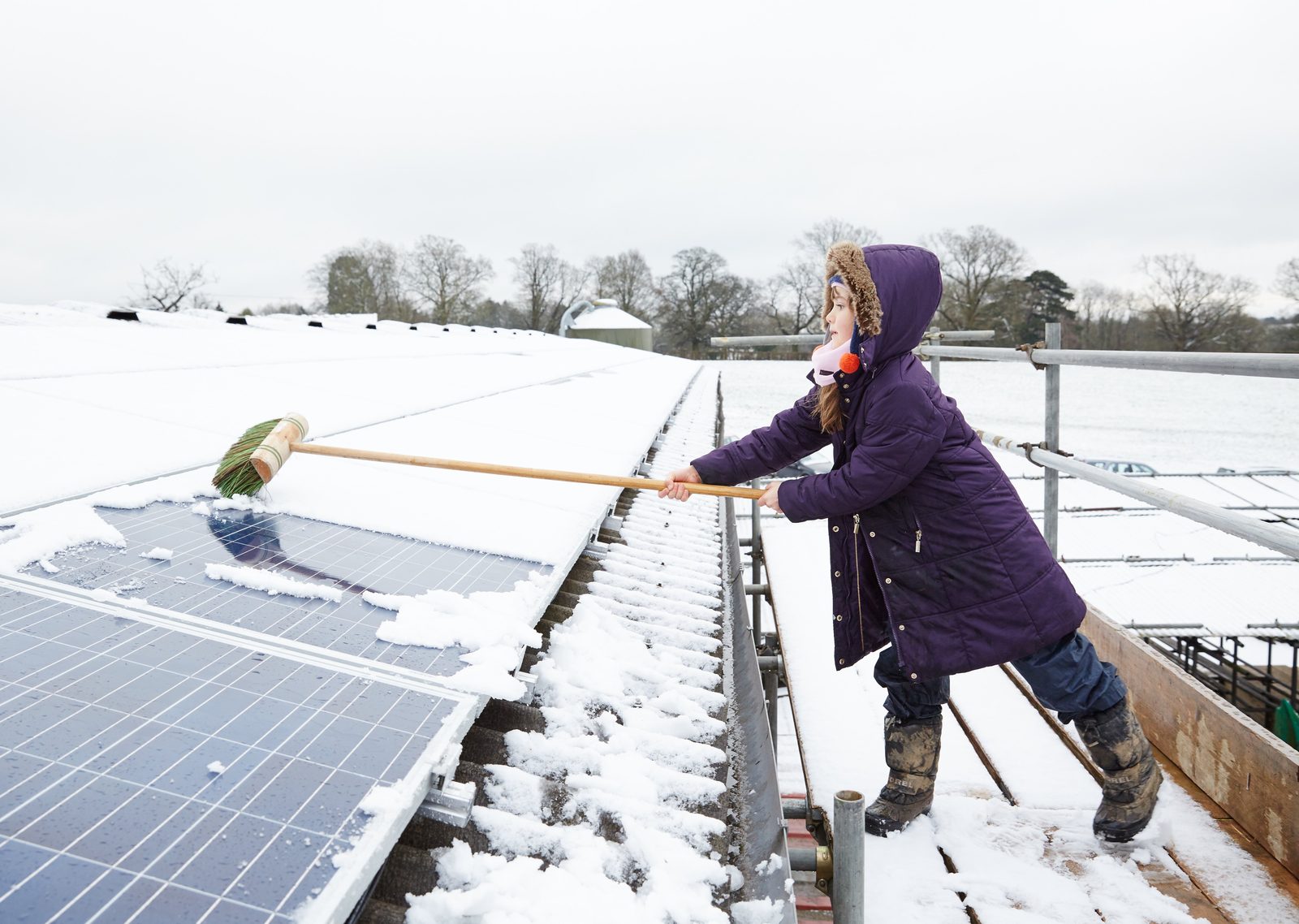
Snow is the one cleaning job where patience beats effort. A soft-bristle brush or foam snow broom, used gently, clears most accumulation. Work from the edges inward and let the brush do the work; pressing hard is what scratches.
Never use a metal shovel, ice scraper, or any sharp tool. Renogy's manual is explicit on this. Never pour hot water on a frozen panel either; the sudden temperature swing can crack the glass.
Often the smartest move is partial clearing: expose a strip of dark glass at the bottom edge of the array. Sunlight warms that strip, the warmth loosens the snow above it, and the rest slides off on its own. Flat-mounted RV panels shed snow worse than tilted ones, so if you are parked for the winter, clearing after each storm keeps production from flatlining for weeks.
Low-water cleaning while boondocking
Off-grid, every gallon counts, and none of the generic guides address this. Here is a method that uses under two gallons for a typical 400W roof array:
1. Dry sweep with the soft brush to remove all loose dust. This is most of the job in desert conditions.
2. Spray and wipe with a pump sprayer or spray bottle of plain water and a microfiber cloth, one panel at a time. Mist, wipe, flip the cloth, buff dry. Work top to bottom so drips fall onto uncleaned glass.
3. Save the hose for home. Do the full soap-and-rinse wash when you are back on hookups. Between washes, the spray-bottle routine every week or two keeps desert dust from building into a film.
Skip so-called waterless wash products unless your panel manufacturer approves them. Most contain polymers and surfactants that manufacturers have never tested on panel glass, and residue can attract dust faster.
How often: a realistic schedule
Go Power!'s baseline is monthly cleaning, more often in dry months. Adjust to your conditions:
- Desert travel and dirt roads: every 2 to 4 weeks. Fine dust is the worst offender and it accumulates fast.
- Coastal camping: every 2 to 4 weeks. Salt film is corrosive to frames and cuts output.
- Forest and pollen country: rinse every 1 to 2 weeks in pollen season; full wash monthly.
- Clean rural or highway travel: every 4 to 6 weeks is usually plenty.
- Stored RV: wash before storage and check on retrieval. Panels under a cover stay clean; uncovered stored panels collect months of grime.
Treat the schedule as a starting point. Your eyes and your charge controller are the real instruments: visible film or a slow output decline means wash day, whatever the calendar says.
Portable and flexible panels
Portable suitcase panels get the same treatment, minus the roof work. Set them on a clean surface (not gravel), wash with the soft brush and water, and dry them before folding. Their advantage is access: you can clean both sides and inspect the hinges and latches at the same time.
Flexible panels need a lighter touch everywhere: less pressure, no scouring pads, and the mildest cleaner that works. Their textured surface holds grime a bit more than smooth glass, so more frequent gentle washes beat occasional aggressive ones.
Frequently asked questions
What is the best way to clean solar panels on an RV roof?
Rinse with a garden hose on gentle pressure, wash with a soft-bristle brush or microfiber mitt and plain water (mild non-abrasive soap only for stubborn spots), rinse again, and dry with a microfiber cloth or squeegee to prevent water spots. Clean in the early morning or at dusk when the panels are cool. Never use a pressure washer, abrasive pads, or harsh chemicals.
Can you pressure wash solar panels?
No. Panel manufacturers including Go Power! explicitly advise against pressure washers. High-pressure water can crack the glass, force water past the panel seals and junction box, and loosen mounting hardware and sealant. A garden hose on a gentle setting is all the pressure you need.
Does rain clean solar panels?
Rain rinses off loose dust but it does not truly clean solar panels. It leaves mineral spots as it dries, and it will not remove bird droppings, tree sap, pollen film, or road grime. If your panels look clean after rain and your charge controller shows normal output, you can skip a wash. Otherwise, clean them by hand.
How do you clean snow off solar panels?
Use a soft-bristle brush or a foam snow broom and sweep gently. Never use a metal shovel, ice scraper, or any sharp tool, which can scratch or crack the glass. Do not pour hot water on a frozen panel; the thermal shock can crack it. In most cases you can also wait: once a corner of the panel is exposed, sunlight warms the dark glass and the rest slides off.
What should you clean solar panels with?
Plain water and a soft cloth, sponge, or soft-bristle brush handle most jobs. For stubborn residue, manufacturers allow a mild, non-abrasive cleanser. Renogy specifically warns against cleaners containing acid or alkali. Avoid ammonia, bleach, abrasive pads, and solvents.
Should you disconnect solar panels before cleaning?
For a normal wash with water and mild soap, you do not need to disconnect anything. Go Power! states that turning off the system is only required if you disconnect wiring. Use non-conductive tools, avoid spraying water directly into the junction box or connectors, and never clean a panel with damaged glass, a damaged backsheet, or exposed wiring.
When is the best time of day to clean solar panels?
Early morning or late afternoon, when the panels are cool to the touch. Renogy's manual recommends cleaning at dawn or dusk to avoid electrical shock or burn risk. Cold water on a hot panel can also cause thermal stress, and soap dries into spots quickly in direct sun.
How often should you clean RV solar panels?
Go Power! recommends monthly cleaning, more often in dry and dusty months. A practical schedule: every 2 to 4 weeks when traveling dusty roads or parked near the coast, every 4 to 6 weeks in cleaner rural areas, and a check after any dust storm, pollen season, or long storage. Let your eyes and your charge controller decide: visible film or a noticeable output drop means it is time.
Will cleaning solar panels void the warranty?
Cleaning per the manufacturer's instructions will not void your warranty. Problems arise from improper cleaning: pressure washers, abrasive materials, and harsh chemicals are the usual exclusions. Go Power! specifically ties flexible-panel care to warranty compliance, advising owners to follow manufacturer recommendations. When in doubt, check your panel's manual before trying a new cleaning product.
Can you walk on an RV roof to clean solar panels?
Many RV roofs can support a person's weight, but check your owner's manual for the roof's weight rating first, step only where the roof is supported, and never step on the panels themselves. A safer approach for most owners is cleaning from a ladder with a telescoping soft-bristle brush so you never need to walk the roof at all.