How-To Guides
RV Generator Repair and Maintenance: Diagnose It, Fix It, and Stop Paying for Neglect (2026)
Cummins and Honda service intervals · Onan fault codes · Carburetor repairs · October 2026
Here is the uncomfortable truth most repair shops will confirm: most RV generators die from neglect, not old age. The single most common repair in small-engine shops is a carburetor clogged by stale gasoline, a failure that costs hundreds of dollars and is almost entirely preventable. This guide gives you the real maintenance intervals straight from Cummins, Honda, Champion, and Generac manuals, a fault-code decoder for Onan gensets, honest repair-vs-replace economics, and a clear line between DIY-safe work and dealer-only work. If your generator will not crank at all, start with our RV generator battery guide to rule out the battery first.
Affiliate disclosure: RV Solar Power Guide is reader-supported. When you buy through links on this page, we may earn a commission at no extra cost to you. Our picks come from comparing verified specs and price. We don't accept payment for placement.
#1 repair cause
Stale gasoline varnishing the carburetor. Preventable with treated fuel and monthly exercise.
Exercise
Onan: 1 hour/month at half load (operator manual); Cummins Handbook: 2 hours/month at 50%+ for gas.
Oil changes
Onan: first 20 hrs, then every 150 hrs or yearly. Honda: first 20 hrs, then every 100 hrs or 6 months.
Fault code 36
Engine stopped without command, usually fuel-related: pump, filter, line, or varnished carburetor.
RV generator repair and maintenance guide
Safety: generators produce deadly carbon monoxide, and you will be handling gasoline, hot exhaust, and spinning parts. Never run a generator in an enclosed space or near open windows and vents, let the engine cool before touching anything, and keep fuel away from ignition sources. If a job feels out of your depth, hand it to a certified RV technician.
Why generators actually fail
Ask a small-engine mechanic what keeps his bays full and the answer is stale fuel. One shop pro estimates that over 70 percent of his repairs are gum and varnish clogging carburetor passageways and jets, and industry reporting calls stale gas the number one killer of small engines. RV generators are especially vulnerable because they sit idle for months between trips, which is exactly when gasoline starts breaking down.
The failure ladder looks like this. First, untreated gasoline varnishes inside the carburetor (Cummins says gasoline can begin to gum and varnish in as little as 30 days). Next, the varnish narrows the tiny fuel jets, so the engine surges, hunts up and down, or runs lean. Eventually the jets clog fully and the generator will not start at all. A certified RV technician summed up the pattern bluntly: most RV generators die from neglect, not old age.
The RV association FRVA lists four owner failures that kill generators: not exercising the genset monthly, skipping the manual's maintenance schedule, leaving the genset exposed to moisture and critters, and not checking the oil before running it. Every one of those is free or nearly free to fix. This guide works through them in order of importance.
The monthly exercise rule
If you do exactly one thing from this guide, make it this: exercise your generator every month. Here is what the manuals actually say, because the numbers differ by source and getting this right matters.
- Cummins Onan QG 4000/5500 operator manual: run the set at least 1 hour each month at approximately half of rated power. One single exercise period is better than several shorter ones. The manual says exercising drives off moisture, re-lubricates the engine, replaces stale fuel in the fuel system, and removes oxides from electrical contacts and generator slip rings.
- Cummins RV Generator Handbook: run gasoline generators at minimum 50 percent capacity for 2 hours once a month. It warns that lack of exercise causes moisture buildup and fuel system degradation.
Do not try to split the difference or average the two. Your own owner's manual is the binding number; the Handbook figure is the more conservative Cummins recommendation for gasoline sets. What matters is that the run happens under real load (an air conditioner or electric heater, not idle) because load is what heats the engine fully and drives moisture out of the oil and windings.
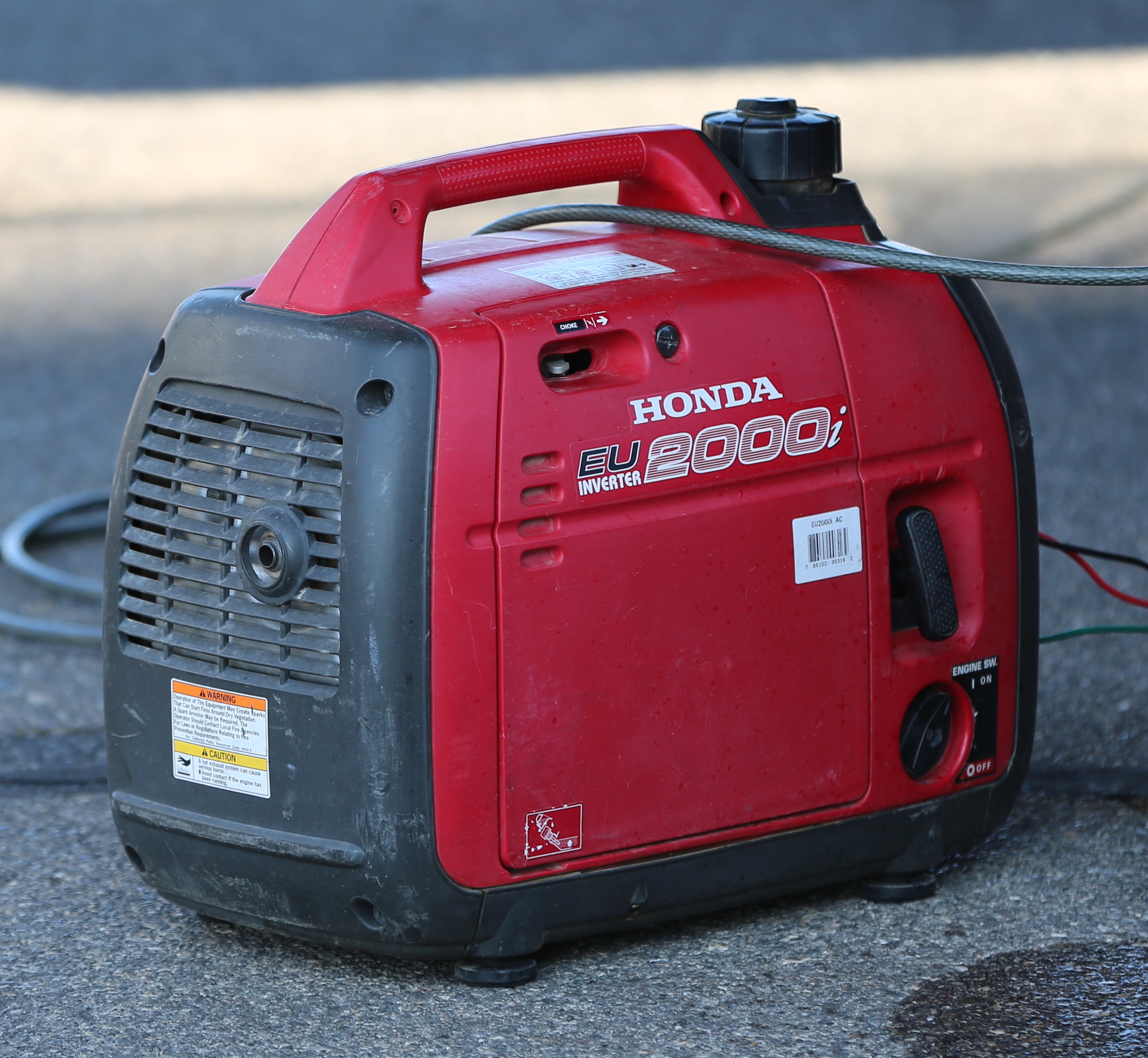
Portable inverter generators need exercise too.Honda's EU2200i, Champion's dual-fuel line, and Generac's iQ3500 all suffer the same stale-fuel problem, and all three manuals describe fuel-system storage procedures for a reason. The storage calendar matters more for portables because they have tiny fuel bowls that gum faster.
Service intervals that matter
Ignore generic internet advice; use the intervals your manufacturer published. Here are the real schedules, condensed:
| Task | Onan QG 4000/5500 | Honda EU2200i | Champion dual-fuel | Generac iQ3500 |
|---|---|---|---|---|
| First oil change | 20 hrs | 20 hrs | 5 hrs | 20 hrs |
| Oil and filter | 150 hrs or yearly | 100 hrs or 6 months | 100 hrs or season (50 hrs heavy load) | 100 hrs or 6 months |
| Check oil level | Every 8 hrs | Each use | Each use | Each use |
| Air filter | Replace 450 hrs | Clean 50 hrs or 3 months | Clean 50 hrs or season | Clean/replace 100 hrs or 6 months |
| Spark plug | Replace 450 hrs or 3 yrs | Replace 200 hrs or yearly | Clean/adjust 100 hrs or season | 300 hrs or season |
| Spark arrester | Not listed | Clean 100 hrs | Clean 100 hrs or season | Clean/replace 100 hrs or 6 months |
| Fuel filter | Replace 500 hrs (dealer) | Tank/filter cleaning yearly (dealer) | Clean fuel valve filter 100 hrs | 300 hrs or season (dealer) |
| Valve clearance | Adjust 500 hrs (dealer) | Check/adjust yearly (dealer) | Check/adjust 250 hrs (dealer) | 300 hrs or season (dealer) |
A few patterns stand out. Built-in Onans stretch intervals longer (150-hour oil changes) but hand more jobs to the dealer. Portable inverters need oil more often (100-hour intervals) because they hold less of it. And every manual draws the same line: oil, air filter, spark plug, and spark arrester are owner jobs; valve clearance is dealer work. Champion also calls for fuel line and LPG hose replacement every 3 years.
Altitude note: engine power drops with elevation. Champion's manual states output is reduced approximately 3.5 percent for every 1,000 feet above sea level, and no carburetor adjustment corrects it. If your generator runs fine at home but struggles at 8,000 feet, that is physics, not a repair issue.
Oil changes, done right
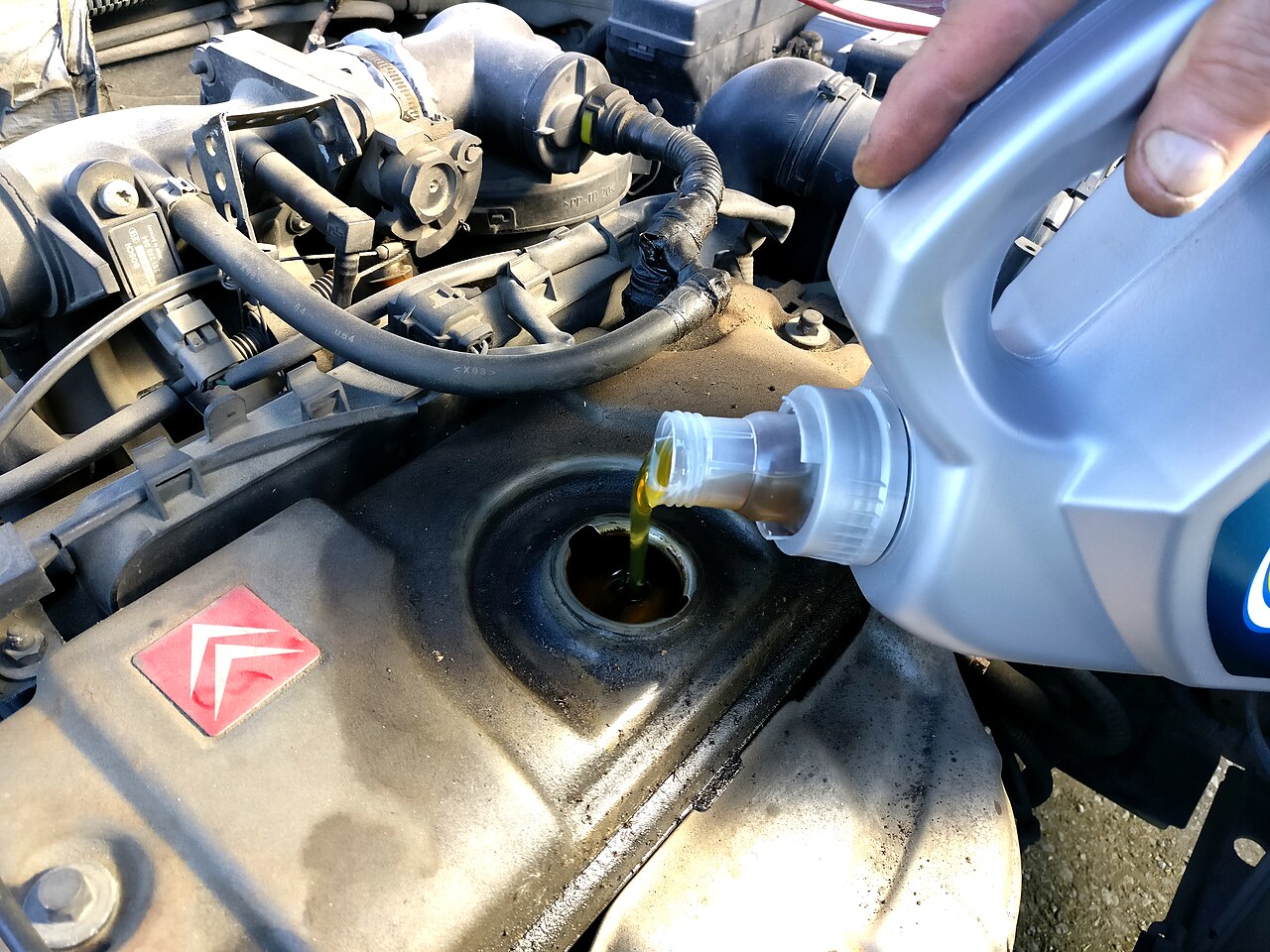
Oil is the cheapest insurance your generator has, and low oil is one of the few things that will shut a running generator down instantly (all four manuals include low-oil protection or explicitly call for oil-level checks). Honda's EU2200i has an Oil Alert system that stops the engine before the oil level falls below safe limits. Do not defeat these systems; they are there because running dry destroys the engine.
- Warm the engine for two to three minutes so the oil flows, then shut it off. Warm, not hot.
- Drain into a pan from the drain plug or dipstick tube, per your manual. Generators hold surprisingly little oil, often under a quart for portables, so overfilling is the usual rookie mistake.
- Change the filter too if your genset has one (Onan: oil and filter are changed together).
- Refill slowly to the marked level with the viscosity your manual specifies for your temperature range, and recheck after the first run.
- Recycle the old oil. Most auto parts stores take it free.
If you only use the generator a few dozen hours a year, the calendar matters more than the hour meter: Onan says yearly, Honda and Generac say every 6 months, Champion says every season. Oil that sits absorbs moisture and acids regardless of runtime.
Air filter and spark plug
A dirty air filter strangles the engine. Honda's manual states it plainly: dirty air filters restrict airflow to the carburetor and reduce engine performance. The result feels like a power problem, weak output under load, black smoke on gas units, when the actual fix is a ten-minute filter cleaning or replacement. In dusty boondocking conditions, every manual says to service the filter more often than the published interval.
Air filter service: foam elements wash in warm soapy water, dry completely, and get a light oil coat (Champion's manual calls for cleaning every 50 hours or season); paper elements get tapped clean and replaced when they stay dark. Never run the engine without the filter installed; unfiltered air scores the cylinder.
Spark plug service: pull the plug and read it. A tan or light gray insulator is healthy. Heavy carbon, wet fuel, or oil fouling tells you the engine is running rich, burning oil, or not reaching full temperature, all symptoms worth chasing before they become a no-start. Gap and torque matter: Honda specifies an NGK CR5HSB plug at 8.7 lbf-ft for the EU2200i. Cross-threading a plug into an aluminum head is a shop visit, so start it by hand and finish with a torque wrench.
Spark arrester: the small screen in the muffler traps carbon and can clog until the engine will not run. Honda, Champion, and Generac all call for arrester cleaning at 100-hour intervals. If your portable has been in storage and now starts but dies under load, check the arrester before you blame the carburetor.
Fuel: ethanol, stabilizer, and propane
Fuel handling is where most generator repairs are born, so this section earns its length.
Ethanol (E10): up to 10 percent ethanol is accepted by Generac's iQ3500 manual, but never E85. The real problem is not the ethanol in fresh fuel; it is what ethanol-blended fuel becomes in storage. Ethanol absorbs moisture, the fuel separates, and the resulting gum varnishes the carburetor. Honda lists bad fuel, specifically a generator stored without treating or draining gasoline, as a cause of both no-start and lacks-power conditions.
Fuel stabilizer: STA-BIL publishes concrete guidance: 1 ounce per 2.5 gallons keeps fuel fresh up to 24 months in all gasoline including ethanol blends, and prevents gum and varnish. The procedure matters: add it to fresh fuel, keep the tank 95 percent full to limit condensation, then run the engine 5 minutes so treated fuel reaches the carburetor. And note the limitation in their own words: stabilizer will not restore old gasoline. If the fuel is already stale, drain it and start fresh.
Run-dry vs treated storage: both approaches work, and the manuals split. Champion's manual says to close the fuel valve and let the engine run until fuel starvation stops it. Cummins, however, warns that emptying the tank will not prevent varnishing because residual fuel remains in the carburetor, and Cummins's warranty does not cover fuel-varnish problems (they sell their own stabilizer, OnaFresh, which tells you how seriously they take it). The safe play: stabilizer in fresh fuel, run it through the carburetor, and do not skip the monthly exercise, which replaces the fuel sitting in the lines and carburetor.
Propane generators: this is where dual-fuel owners have a real advantage. Champion's manual states it plainly: LPG does not create buildup or clog the carburetor, and gasoline in the tank lasts up to 1 year with stabilizer. A propane-first owner who runs gasoline only occasionally has far fewer varnish problems. Propane still needs the monthly exercise run, because moisture does not care what fuel you burn. Champion also calls for LPG hose replacement every 3 years.
The quarter-tank trap: built-in Onan RV generators draw from the coach's main fuel tank through a pickup tube that stops above the quarter-tank level, so the generator cannot strand the coach. This is widely documented by certified RV technicians and owner reports, though Cummins does not publish it officially. If your generator dies at a quarter tank, it is a design feature, not a repair. Keep the tank above a quarter full when you need the genset.
Carburetor problems, the number one repair
When stale fuel has already done its damage, the carburetor is where you end up. The symptom ladder: surging or hunting at constant speed, running only with the choke partially on, dying under load, then no-start. On portables, Champion's manual gives you the timeline: gasoline in the carburetor may gum up and clog it if not used or drained within 2 to 4 weeks.
What a DIYer can try: spray carburetor cleaner into the throat and the accessible jets, and check the fuel filter and lines for restriction first, because a starved carburetor mimics a varnished one. Sea Foam and similar cleaners have their fans, but nothing dissolves a fully varnished jet reliably; this is a prevention tool, not a repair tool.
Rebuild vs replace: on inexpensive portable generators, a replacement carburetor is often cheaper than the labor to rebuild one properly. On Onans, the economics tilt harder: multiple technicians report that Onan shops replace rather than clean or rebuild carburetors, and owner-reported dealer replacements run roughly $588 to $1,700 installed. Those are owner-reported anecdotes, not published rate cards, but they tell you the stakes of skipping the monthly exercise.
Surge diagnosis order: fresh treated fuel, then air filter, then spark plug, then fuel filter and lines, then carburetor. Working the ladder in order keeps you from replacing a carburetor when the problem was a five-dollar filter.
Onan fault codes that matter
Onan gensets speak in blink codes from the start switch, and knowing the handful of codes that show up on real RVs saves a diagnostic fee. Read them this way: count the blinks, then follow the manual.
- 2 blinks: low oil pressure fault. Check the oil level first, then the sensor and wiring.
- 3 blinks: service fault. Press Stop once to get the two-digit code.
- 4 blinks: cranking exceeded 30 seconds without starting (overcrank). Stop cranking, wait for the starter to cool, and work the fuel side of the no-start ladder.
- Code 36: engine stopped without command from the controller. This is the one that shows up on RVs that start fine and die under load. It is typically fuel-related: a failing fuel pump, clogged fuel filter, crimped line, or varnished carburetor.
Work the code before throwing parts. Code 36 with a full tank and fresh fuel points at the pump or filter; code 36 after storage points at the carburetor. If you are getting fault codes on a battery-cranks-fine genset, the electrical side is already ruled out.
DIY vs call a technician
The manuals themselves draw this line, and it is consistent across all four manufacturers:
- DIY-safe: oil and oil filter changes, air filter cleaning and replacement, spark plug cleaning and replacement, spark arrester cleaning, fuel stabilizer treatment, monthly exercise, and general inspections.
- Dealer or qualified technician: valve lash and valve clearance adjustment (marked dealer in the Onan, Honda, Champion, and Generac manuals), Onan fuel filter replacement, Champion combustion chamber cleaning and fuel/LPG line replacement, Generac crankcase breather and cylinder head work, and slip ring or brush service on built-in gensets.
The rule of thumb: if the job requires opening the engine or the generator end, setting clearances, or working around 120V AC components, it belongs to a technician. If the manual lists the procedure with owner-level instructions, it is yours. Generator repairs that involve the transfer switch or AC wiring belong to an electrician or certified RV tech, full stop. See our generator transfer switch guide for the AC-side architecture.
Repair or replace?
Every repair quote is a small math problem: the repair cost against the remaining life of the genset. Here is how owners and techs actually work it.
- Repair wins when the genset is low-hour, the repair is a wear item (carburetor, fuel pump, starter), and the quote is a small fraction of a new unit. A $600 dealer carburetor job on a 500-hour Onan is ordinary maintenance economics.
- Replace starts winning when hours are high (several thousand), parts are discontinued, or the repair approaches half the cost of a new unit. Some owners report Onan carburetor replacements with labor reaching about $1,700, which changes the math on a 20-year-old genset.
- Diagnostic fees are real. One owner reported a Cummins dealer quoting $600 to diagnose at $250 per hour. Get the diagnosis fee in writing before authorizing work, and get the quote itemized: parts, labor hours, and rate.
These figures are owner-reported anecdotes from forums, not published rate cards, so use them as ballpark context, not quotes. Dealer oil change costs, notably, could not be verified from any real source; call your dealer for the number. What you can verify is the prevention: a bottle of stabilizer and a monthly exercise run cost almost nothing, and they prevent the repair in the first place.
Winter storage and pre-trip checklist
Gasoline gensets: change the oil, add stabilizer to fresh fuel and run it through the carburetor (or drain per your manual), and either keep exercising monthly or fully winterize per the manual. Store with the tank nearly full of treated fuel to limit condensation, per STA-BIL's guidance.
Propane gensets: close the supply valve and let the engine run until it stops, disconnect or maintain the battery per your manual, and check the LPG hoses every 3 years per Champion's schedule. Propane storage is far more forgiving because LPG does not gum the carburetor, but the monthly exercise run still matters for moisture control.
Pre-trip checklist, five minutes: oil level, fuel level (above a quarter tank for built-ins), air filter look-over, battery terminals, and a no-load start to confirm it fires before you need it at the campsite. If the generator will not crank at all, the battery is the first suspect; our generator battery guide walks through that diagnosis. And if you are still deciding what size generator your rig needs, see what size generator for a 30-amp RV air conditioner.
Frequently asked questions
Why does my RV generator surge or rev up and down?
Surging (hunting) is almost always fuel delivery: stale gasoline has varnished the carburetor jets, or the fuel filter is clogged. Champion's manual notes gasoline left in a carburetor can gum up and clog it within 2 to 4 weeks of sitting. Running treated fuel through a monthly exercise session is the prevention; a varnished carburetor often needs cleaning or replacement.
How often should I exercise my RV generator?
Cummins's operator manual for the Onan QG 4000/5500 says at least 1 hour each month at about half rated power, in a single exercise period. Cummins's RV Generator Handbook recommends 2 hours per month at minimum 50 percent load for gasoline sets. Exercising drives off moisture, re-lubricates the engine, replaces stale fuel in the lines and carburetor, and keeps oxides off the slip rings. Propane sets still need the exercise, but propane does not gum the carburetor.
What does Onan fault code 36 mean?
Onan fault code 36 means the engine stopped without a command from the controller. It is typically fuel-related: a failing fuel pump, clogged fuel filter, crimped line, or a varnished carburetor. On an Onan RV genset you read codes from the start switch: 2 blinks is low oil pressure, 3 blinks is a service fault (press Stop once for the two-digit code), and 4 blinks means cranking exceeded 30 seconds without starting.
How often do I change the oil in my RV generator?
Cummins says the Onan QG 4000/5500 gets its first oil change at 20 hours, then every 150 hours or at least once a year, oil and filter together, with the oil level checked every 8 hours of operation. Honda's EU2200i manual calls for the first change at 20 hours, then every 100 hours or 6 months. Champion and Generac portables call for the first change after 5 and 20 hours respectively, then every 100 hours. Always use the viscosity your owner's manual specifies for your temperature range.
Can I use ethanol gas (E10) in my RV generator?
Generac's iQ3500 manual says fuel with up to 10 percent ethanol is acceptable, but never E85. Honda lists bad fuel, including a generator stored without treating or draining gasoline, as a cause of no-start and lacks-power conditions. A fuel stabilizer like STA-BIL prevents gum and varnish in ethanol blends, but it cannot restore fuel that has already gone stale, so treat fresh fuel and run the engine 5 minutes afterward so treated fuel reaches the carburetor.
Should I run my generator dry for storage or fill the tank?
Both work if done right, and both fail if done wrong. Champion's manual says to close the fuel valve and run the engine until fuel starvation stops it. Cummins warns that emptying the tank alone does not prevent varnish because residual fuel remains in the carburetor, so combine draining with stabilizer. STA-BIL's guidance is a 95 percent full tank of treated fuel to limit condensation, 1 ounce per 2.5 gallons. On propane, the question mostly disappears: Champion states LPG does not create buildup or clog the carburetor.
Can I replace the spark plug and air filter myself?
Yes. Every major manufacturer lists air filter and spark plug service as owner-level maintenance. Onan calls for air filter and spark plug replacement every 450 hours or 3 years; Honda's EU2200i calls for air cleaner cleaning every 50 hours and plug replacement every 200 hours; Champion calls for air filter cleaning and plug service every 50 to 100 hours. Valve clearance adjustment, by contrast, is dealer-marked in every manual.
Is it better to repair or replace my RV generator?
It depends on hours, age, and the size of the repair. Owner-reported Onan carburetor replacements run roughly $588 to $1,700 at a dealer, with Onan shops generally replacing rather than cleaning carburetors, so a carburetor failure on an old high-hour genset can argue for replacement. If the genset is low-hour and the repair is a fraction of a new unit, repair wins. Get an itemized quote before deciding; diagnostic fees alone run several hundred dollars at some dealers.
Why won't my generator run with the fuel tank at a quarter full?
Built-in Onan RV generators draw from the coach's main fuel tank through a pickup tube that stops above the quarter-tank level, so the coach cannot be stranded by the generator. This is widely documented by certified RV technicians and owner reports, though Cummins does not publish it officially. Keep the tank above a quarter full when you need the generator.
How do I store my RV generator for winter?
For gasoline sets: change the oil, treat the fuel with stabilizer or drain the carburetor per your manual, and either keep the monthly exercise schedule or fully winterize the genset. For propane sets: close the supply valve, let the engine run until it stops, and disconnect or charge the battery per your manual. Propane does not gum the carburetor, which makes propane storage far more forgiving, but the genset still needs its monthly exercise run to control moisture.