How-To Guides
Pop Up Camper Solar Panels: The Complete Guide for Canvas Roofs & Raising Roofs (2026)
SAE/Zamp port explained · Raising-roof wiring · Realistic load numbers · Renogy suitcase specs · October 2026
A pop-up camper's roof is canvas, and it moves. That single fact changes every solar decision: no drilling, no rigid roof mounts, and wiring that must survive the roof raising and lowering. This guide covers the three ways pop-ups do solar (portable suitcase panels, bonded flexible panels, hardside A-frame rigid panels), the factory solar-ready port hiding on many frames, realistic power needs, and raising-roof wiring done right. For the full sizing math, see our RV solar sizing guide.
Affiliate disclosure: RV Solar Power Guide is reader-supported. When you buy through links on this page, we may earn a commission at no extra cost to you. Our picks come from comparing verified specs and price. We don't accept payment for placement.
The rule
Canvas roof = no drilling, no rigid mounts. Portable suitcase panels are the practical answer for most pop-ups.
How much
100W covers lights, pump, phones, and a fan (~35 Ah/day). A 12V fridge adds ~70 Ah/day and wants 200W+.
Free port
Many pop-ups have a frame-mounted SAE/Zamp solar-ready port wired to the battery. Check yours.
Watch out
Zamp reverses SAE polarity. Always meter-check before plugging in.
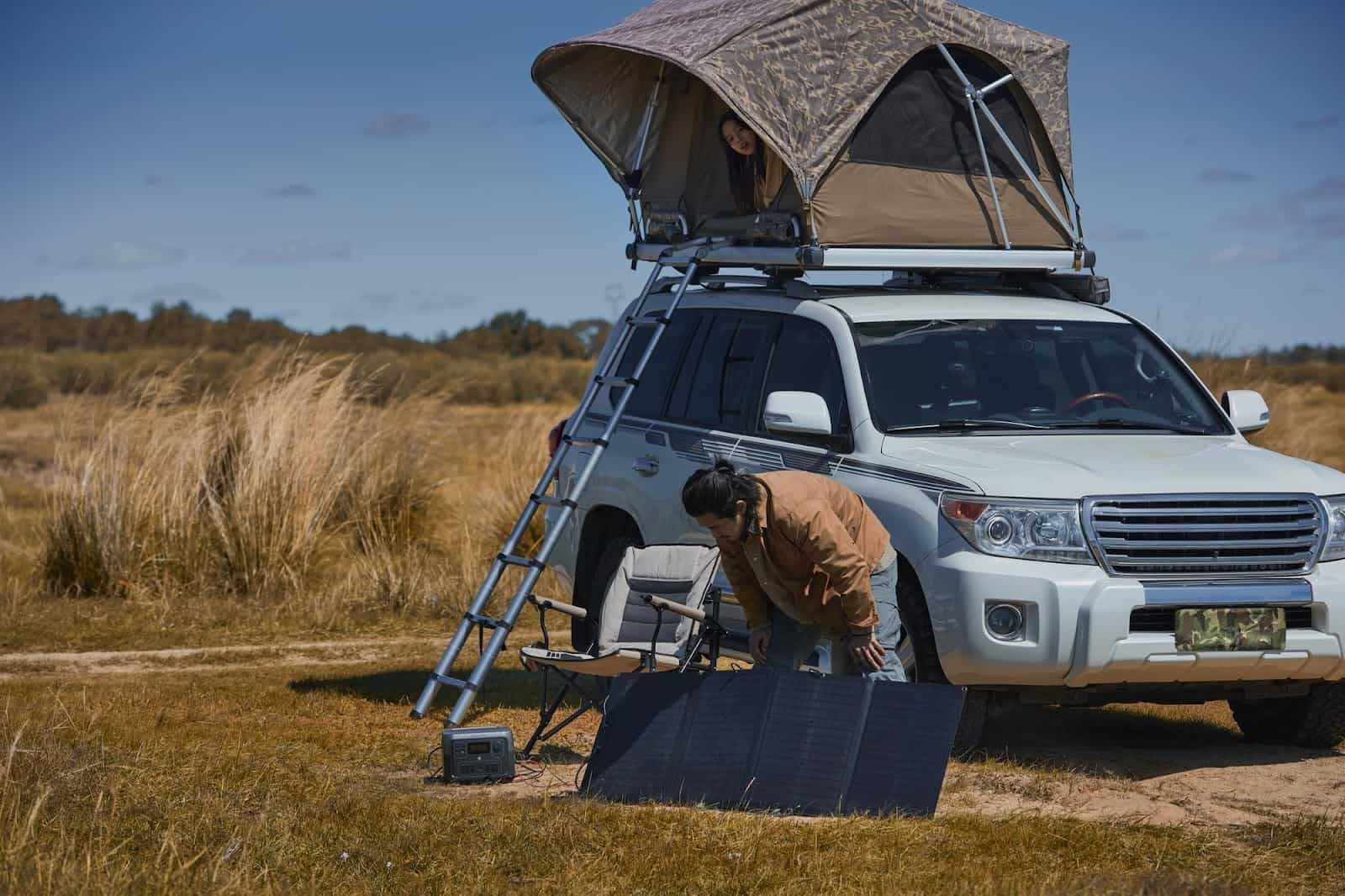
Pop up camper solar panel guide
Safety: use a spotter on the ladder, and never put a charge controller inside the battery box (charging gases are explosive). If unsure about wiring, consult a certified RV technician.
Why pop-ups are different
A pop-up camper has a canvas or vinyl roof that folds down for travel and raises at camp. That means:
- No rigid mounting surface on the soft walls; you cannot drill through canvas without tears, leaks, and voided warranties.
- The roof moves, so any wiring to roof-mounted panels must survive raising and lowering.
- Tiny 12V systems: one battery in a tongue box, simple loads, and everything sips power.
The one exception: hardside A-frame pop-ups (Aliner, Rockwood A-series) have rigid angled roofs that take rigid panels like a small travel trailer. They get their own section below.
How much solar does a pop-up camper need?
Pop-up loads are small. Realistic figures from published sizing data: LED lights 1-8W each, phone chargers 2-4W, the water pump ~60W intermittent, and a furnace fan that can draw 40W or more. A simple camper baseline (lights, pump, phone and tablet charging, some laptop or TV, a vent fan a few hours) totals about 35 Ah per day at 12V.
- Basics only (~35 Ah/day): a single 100W panel (~25-35 Ah/day in good sun) covers it.
- Add an efficient 12V fridge (+70 Ah/day): now you want 200W or more of panels and a larger battery.
- Add the furnace (+15 Ah/day or more): winter camping pushes the budget further; alternator or generator help fills the gap.
One competitor claims a pop-up "typically requires 1500-3000 watts"; that conflates watts with watt-hours and is wrong for pop-ups by an order of magnitude. Trust the amp-hour math above.
Portable suitcase panels: the practical answer
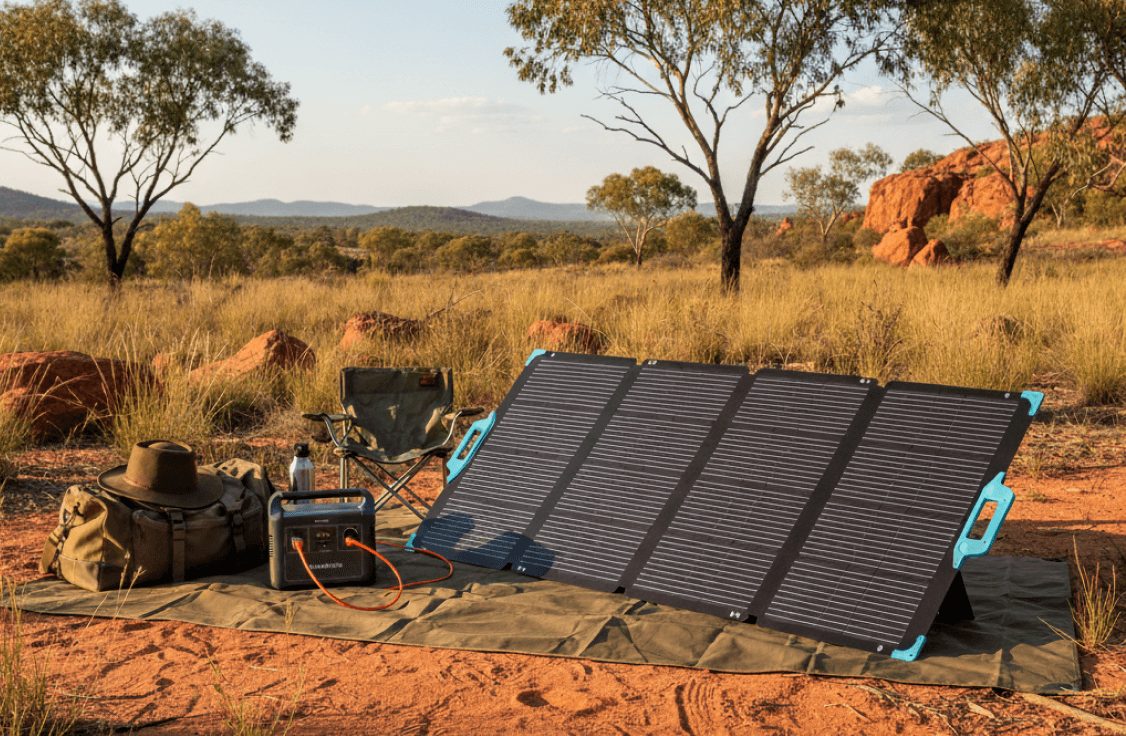
A folding suitcase panel sets on the ground and plugs in at camp. Why it wins for pop-ups:
- No drilling, no roof work, no raising-roof wiring.
- Park the camper in shade, put the panel in sun.
- Aim it at the sun through the day with the adjustable kickstands.
- It moves to your next camper.
Reference specs (per Renogy's published manuals): the Renogy 100W Eclipse Suitcase (two 50W panels, folding) gives 100W max, Voc 21.6V, folds to 21.1 x 21.5 x 3.1 in, weighs 19.4 lbs, and includes a 20A Voyager PWM controller (IP65, supports 7 battery types including LiFePO4). A lightweight 100W version weighs just 7.25 lbs with a 10A controller; the 200W version weighs 33.6 lbs. The Go Power GP-PSK-130 is a 130W folding kit with Anderson, SAE, XLR, and ring-terminal connectivity.
Connection rule, per Renogy's manual: always connect the battery wires to the charge controller first, then the solar panels. Never panel-first.
Flexible panels on the raising roof
Want a permanent install? Flexible panels can be adhesive-bonded to the hard roof panel of the raising roof with caravan-grade adhesive (Sikaflex 522 is the commonly cited product), with zero drilling. A published 160W pop-top kit example: 1434 x 699 x 2 mm, 3.3 kg, ETFE coating, Vmp 18.2V, paired with a Victron SmartSolar MPPT 75/15.
Limitations to state honestly: bonded panels run hotter (no airflow gap), cannot be tilted, and produce nothing when you park the camper in shade, which is the other half of why portable panels remain the most popular answer. See our van solar panels guide for the full rigid-vs-flexible comparison.
The factory solar-ready port
Before buying anything, check your frame. Many pop-ups and small trailers ship "solar ready": a 2-pin SAE connector on the frame, wired directly to the battery, with no charge controller in between. A suitcase kit with its own controller plugs straight in.
The polarity gotcha: Zamp reverses polarity versus the standard SAE convention. Always verify with a voltmeter before plugging in, and use a reverse-polarity adapter if needed. Any brand's suitcase works with the port, not just Zamp's. Practitioner advice: add a 15A inline fuse at the battery positive terminal, and use a long extension cable so the panel sits in full sun while the camper stays shaded.
Wiring when the roof raises and lowers
If you mount panels on the raising roof, the wiring must flex with it. Practitioner wisdom from pop-top builders:
- Run panel cables in flexible conduit inside the canvas, made longer than needed so it naturally bends one way when the roof lowers.
- Route so wires can never be trapped in the pop-top mechanism.
- Use MC4 disconnects so the roof wiring and cabin wiring can separate for service.
- Bring 10 AWG MC4 cables into the trailer through a cable-entry gland in the floor or cabinets, never through the canvas.
- Keep wiring off exterior surfaces where it can flap in the wind.
For controller selection see our MPPT charge controller guide; the placement rule matters here: the controller lives in a ventilated spot in the cabin, never inside the battery box, because charging batteries produce explosive gases.
Battery and controller placement
Pop-ups standardize on a tongue battery box up front. Put the controller in a ventilated cabin space near the battery run, fuse the battery positive within inches of the terminal, and keep wire runs short and 10 AWG or heavier for the solar side. For battery types and care see our RV battery system guide.
Hardside A-frame pop-ups
Aliner, Rockwood A-series, and similar A-frames have rigid angled roofs. They take standard rigid panels mounted like a small travel trailer; the Rockwood A123RG even ships with a factory 125W roof panel. Documented owner installs use series-wired panels with 10 AWG MC4 extensions. Treat these like a tiny travel trailer: see our travel trailer solar guide.
Setup, storage, theft, and maintenance
- Setup: deploy the suitcase at camp, aim with the kickstands, fold and store inside for travel. Nothing rides on the roof.
- Theft: portable panels walk away. Run a cable lock through the frame to the trailer or a tree, never leave one unattended at a trailhead, and bring it inside at night.
- Maintenance: wipe panels clean; check MC4 connections seasonally; store the battery on a smart maintainer over winter.
Frequently asked questions
Can you put solar panels on a pop up camper roof?
Not on the canvas itself. Flexible panels can be adhesive-bonded to the raising hard roof panel without drilling, and hardside A-frame pop-ups with rigid angled roofs can take rigid panels. For most canvas pop-ups, portable suitcase panels on the ground are the practical answer.
What size solar panel do I need for a pop up camper?
100W covers the basics: LED lights, the water pump, phone charging, and a vent fan. Add a 12V fridge and you want 200W or more plus a bigger battery. A typical pop-up's basic loads total roughly 30 to 40 Ah per day at 12V.
Are flexible or portable solar panels better for a pop-up camper?
Portable wins for most pop-ups: no installation, you can park in shade and put the panel in sun, aim it through the day, and it moves to your next camper. Flexible panels bonded to the raising roof are the install-once option, but they run hotter, cannot tilt, and produce nothing when you park in shade.
What is the Zamp solar ready port on my camper?
A 2-pin SAE connector on the frame, wired directly to the battery with no charge controller. Zamp reverses the polarity versus the standard SAE convention, so always verify with a voltmeter and use a reverse-polarity adapter. Suitcase kits with their own controller plug straight in.
How do I wire solar on a roof that raises and lowers?
Run the cables in flexible conduit inside the canvas, make it longer than needed so it bends one way when the roof lowers, and keep wires out of the pop-top mechanism. Bring wiring into the trailer through a cable-entry gland in the floor or cabinets, never through the canvas. Use MC4 disconnects so the roof and cabin wiring can separate.
Can I run a 12V fridge in my pop-up camper on solar?
Yes, but budget for it: an efficient 12V fridge adds about 70 Ah per day at 12V on top of the roughly 35 Ah of basic loads. That means 200W or more of panels and a larger battery bank. Without a fridge, 100W handles a pop-up comfortably.
Will a 100W panel keep my pop-up battery charged?
Yes, for basic loads. One R-Pod owner reports that a 100W kit runs most 12V things as long as you are frugal with energy, the weather is sunny, and the panel is not shaded. Use a long extension cable so the panel sits in full sun.
Do I need a charge controller with a suitcase solar kit?
Suitcase kits include their own controller, so they are plug-and-play. A bare panel wired to the SAE frame port needs a controller in between. Per Renogy's manual: always connect the battery wires to the charge controller first, then the solar panels.
Can I drill into my pop-up camper roof?
Never drill through canvas or vinyl; it tears, leaks, and voids warranties. Flexible panels can be bonded with caravan-grade adhesive (like Sikaflex 522) to the hard roof panel without drilling. Hardside A-frame roofs take standard rigid-panel mounting.
How do I stop someone stealing my portable solar panel?
Run a cable lock through the panel's frame and lock it to the trailer or a tree. Never leave a portable panel unattended at a trailhead or day-use site, and bring it inside the camper or tow vehicle at night.